Blog
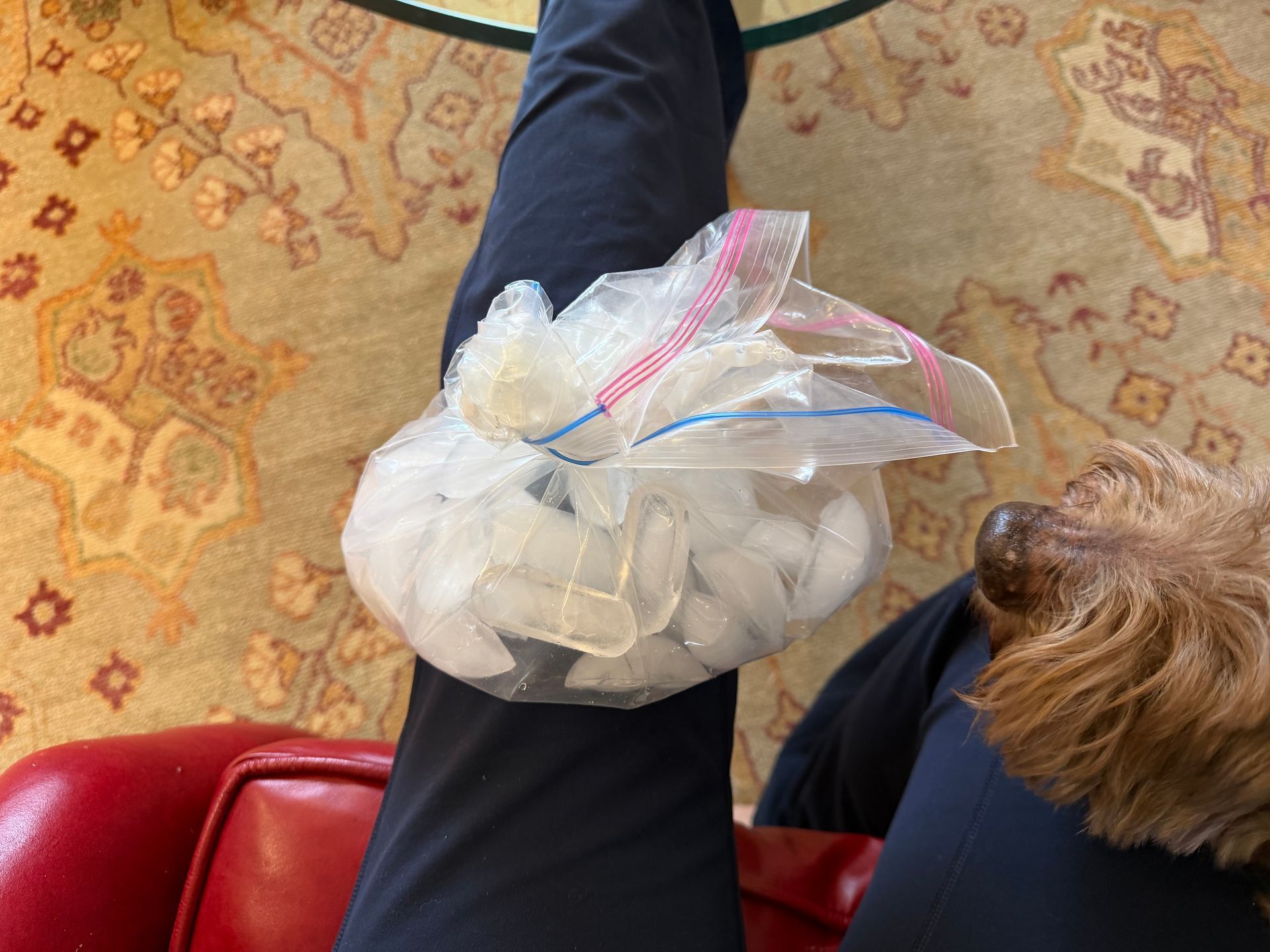
Ever feel like you're doing everything right and still not getting the results? That's how I've been feeling lately with my ACL/MCL rehab journey. I've followed all the instructions. PT three times a week and rehabbing on my own on days off. Leg extensions, heel slides, squats. I even woke up doing quad sets in the middle of the night last week. It's not that I'm failing. My providers are basically happy with my progress. People around me say things like, "Wow you are staying so positive!" But I wobble when I walk. Making my bed takes forever. I've lowered my expectations about what I can get done (including writing newsletters). And while it's true on some level that I’ve stayed positive, I'm also very tired. So for this month's message, I'm sharing strategies I'm leaning into in real time. These are tools I use with my clients when the going is tough and the road ahead is long. If you're pushing forward on a challenge right now, I invite you to bring it to mind and walk through the strategies below. Tune into progress If you've worked with me, you know that my coaching approach starts with progress. Because what we focus on grows. I open most sessions with some version of "What's gone well since we last met?" And there is always progress, however small it may seem. Made it to PT—that's perseverance and hope. Did rehab at home—that's self-regulation. Reading this newsletter for inspiration qualifies. Kaizen—or very small steps—are our building blocks. One squat becomes ten. Ask yourself: What small win can you claim to propel you forward? What strengths and resources did you draw on to take that step? Lean into relationships One of the best pieces of advice I got lately came when a friend who has been mothering me in the most welcome way told me, "You think you are going to be the best at rehab. That you are going to do such a good job, you'll come back faster than anyone else. Well, it's not like that." This gem, and another from a colleague who advised me to print out a diagram of a knee to connect with what is happening to my body, shifted my perspective. I'm more accepting of the pace of my recovery and more grateful for my healing because of these insights. Not to mention all the dishes my family has been doing—without complaint— while I sit at the kitchen table. Thank you. Other people matter. Accept their support. Ask yourself: Who supports you? How and with whom can you disclose a little more of your struggle today? Take self-compassion breaks And finally, take a moment to be kind to yourself. In my work I lean heavily on the wisdom of Kristin Neff , PhD, who drew on years of research to create a three step process you can do by yourself when you are experiencing strong emotions in a challenging moment. Useful for anyone, her method is particularly handy for clients who struggle with self-criticism. Here's how it works: Name the emotion. For example—I’m so stuck. I can't believe my knee blew up again! This feels unending. Remember you're not alone. For example—There are people all over the world dealing with ACL reconstruction, struggling downstairs, icing their knees, and frustrated. No matter what you are dealing with, others are on similar journeys. Give yourself some words of encouragement, like you would a dear friend. For example—"You are doing the best you can. You got through surgery, your recovery is in process, and you are learning so much through this experience. You are right where you need to be." Speak to yourself with care. Take time with this exercise to explore what it is like to truly tend to yourself. In closing These approaches are applicable to health, wellness and life challenges. If you're working towards something important to you, and it feels elusive, you're in good company. I'd love to hear how these tools resonate. And as always, I'm here for a deep dive customized to your needs. Book a free 30-minute exploratory call here. Or shoot me an email right now. With best & warmest regards, Jennifer 🌱

What do Olympic Champion Lindsey Vonn, and I, Coach Jennifer Hanawald, have in common?
Possibly quite a lot.
One thing for sure - a brand new, complete ACL tear.
Ouch.

It’s December, and I thought I'd use this installment to explore wrapping things up for 2025, before the year-end festive frenzy sets in. By wrapping things up, I mean becoming aware of how the year has gone, closing some last loops, and doing what you can to finish strong. As a coach, I can't resist—I know that beginnings and endings can be great motivators. And yes, I have a process for this! Some Context: An Annual Ritual The process below is for everyone. But first—a little background. Every January, I offer a stand-alone 90-minute group coaching program, Harvesting & Planting. Participants prep by working with simple, evidence based prompts grounded in appreciative inquiry. Then, we come together in a facilitated format to name progress, grow, and clarify our intentions for the coming year. This December post stems from my hope to bring this year's growth full circle, whether or not you were part of our January program. And your invite to join us next year is here! Now, let’s close out 2025! Finish Strong: A Five Step Process So what does it look like to finish strong? From a coaching perspective, it's about awareness, celebrating success, and opening to what's next. If you were part of the 2025 H&P process, pull your notes out! If not, reference photos, January to-do lists, and any resolutions you made. Put the kettle on and hit pause for twenty minutes. Step One: Remember Where were you at the beginning of the year? What hopes and plans did you have for 2025? Jot them down. Step Two: Name Progress How did it go? Note concrete steps and effort. We are leveraging a theory here that witnessing our own actions shapes our opinions of who we are. So naming and claiming progress, even small progress, matters. Give yourself some credit. If you accomplished less than hoped, notice that too, without judgment. Step Three: Acknowledge & Assess Setbacks Maybe with some goals you barely gained ground, or even slid backward. What got in the way? Competing priorities? Major events? On the other hand, what kept it from being even worse? In coaching we take time to understand what really happened so we can shift course. Be honest without beating yourself up. Step Four: What do you want to do next? Leverage the milestone of year end. Given the time we have left in 2025, what feels doable? What loop can you close, or small step can you take that will nudge you a tad closer to your goals, or simply set you up to begin again? Step Five: Jump into this year’s Harvesting & Planting! Join me and a group of supportive peers to make 2026 the best it can possibly be! Commit to one 90-minute standalone session in January, with the option to extend. Info & Register here. And of course, reach out if you want to explore how to leverage the science of positive psychology to increase your wellbeing and to create positive change in partnership with me. Book a free 30-minute exploratory call here. With best & warmest regards, Jennifer ❄️

What's your first reaction when you think of Thanksgiving? For a lot of us, the excitement of a holiday focused on being with loved ones comes with a twinge of discomfort about family dynamics. Hopes for a holiday of warmth and closeness are high, but so is the stress. Still, we all keep coming back for more. How to reduce the stress and make this the best possible Thanksgiving? Positive psychology—or the science of flourishing— has a lot to offer in response to this question. Here’s an adaptation of a tool I have in my back pocket for when a client is moving into a moment where there are a lot of moving parts and they want to show up at their best. Five steps to showing up for Thanksgiving at your best Step 1 Take a moment to remember what you value about Thanksgiving. It might be about being with the people you love, a gorgeous feast, or gratitude for what you have. We have so much blasted at us about the meaning of this holiday, but your answer is what matters. What’s it about for you? Step 2 Imagine the holiday going as well as it possibly could—and focus in on what you can control. How you greet others. How you prepare the house or the food you are bringing to the feast. How much you sleep and drink. Acts of kindness you can offer, including to yourself. Make these concrete and detailed in your mind. Step 3 Set your priorities. Decide what you most want to be able to say about how you showed up for this Thanksgiving. Pick one or two important things that you have control over. For example, I focused on my daughter by really listening to her. Or, I served a beautiful meal. What does success look like for you? Step 4 Prime yourself and remind yourself. Put a sticky on your bathroom mirror or on your desk to keep your priorities top of mind. Plan a check-in with yourself by setting an alarm or tying it to an action, like brushing your teeth or walking the dog. Whatever works for you. Step 5 Celebrate! Name and claim your wins. Do this, even if the walls are barely standing on Sunday. In coaching we always find something to celebrate, even if it’s just that we learned what we don’t want to happen next time. We build from there. And of course, reach out if you want to explore how to leverage positive psychology to show up at your best in moments of stress and to create positive change in partnership with me. Book a free 30-minute exploratory call here. With best & warmest regards, Jennifer 🍁

Are you #grateful?
It's November, and that means the leaves are falling in earnest here, the year is winding down, and—brace yourself—reminders to be #GRATEFUL will soon be popping up in all our feeds.

Ever feel like you're doing everything right and still not getting the results? That's how I've been feeling lately with my ACL/MCL rehab journey. I've followed all the instructions. PT three times a week and rehabbing on my own on days off. Leg extensions, heel slides, squats. I even woke up doing quad sets in the middle of the night last week. It's not that I'm failing. My providers are basically happy with my progress. People around me say things like, "Wow you are staying so positive!" But I wobble when I walk. Making my bed takes forever. I've lowered my expectations about what I can get done (including writing newsletters). And while it's true on some level that I’ve stayed positive, I'm also very tired. So for this month's message, I'm sharing strategies I'm leaning into in real time. These are tools I use with my clients when the going is tough and the road ahead is long. If you're pushing forward on a challenge right now, I invite you to bring it to mind and walk through the strategies below. Tune into progress If you've worked with me, you know that my coaching approach starts with progress. Because what we focus on grows. I open most sessions with some version of "What's gone well since we last met?" And there is always progress, however small it may seem. Made it to PT—that's perseverance and hope. Did rehab at home—that's self-regulation. Reading this newsletter for inspiration qualifies. Kaizen—or very small steps—are our building blocks. One squat becomes ten. Ask yourself: What small win can you claim to propel you forward? What strengths and resources did you draw on to take that step? Lean into relationships One of the best pieces of advice I got lately came when a friend who has been mothering me in the most welcome way told me, "You think you are going to be the best at rehab. That you are going to do such a good job, you'll come back faster than anyone else. Well, it's not like that." This gem, and another from a colleague who advised me to print out a diagram of a knee to connect with what is happening to my body, shifted my perspective. I'm more accepting of the pace of my recovery and more grateful for my healing because of these insights. Not to mention all the dishes my family has been doing—without complaint— while I sit at the kitchen table. Thank you. Other people matter. Accept their support. Ask yourself: Who supports you? How and with whom can you disclose a little more of your struggle today? Take self-compassion breaks And finally, take a moment to be kind to yourself. In my work I lean heavily on the wisdom of Kristin Neff , PhD, who drew on years of research to create a three step process you can do by yourself when you are experiencing strong emotions in a challenging moment. Useful for anyone, her method is particularly handy for clients who struggle with self-criticism. Here's how it works: Name the emotion. For example—I’m so stuck. I can't believe my knee blew up again! This feels unending. Remember you're not alone. For example—There are people all over the world dealing with ACL reconstruction, struggling downstairs, icing their knees, and frustrated. No matter what you are dealing with, others are on similar journeys. Give yourself some words of encouragement, like you would a dear friend. For example—"You are doing the best you can. You got through surgery, your recovery is in process, and you are learning so much through this experience. You are right where you need to be." Speak to yourself with care. Take time with this exercise to explore what it is like to truly tend to yourself. In closing These approaches are applicable to health, wellness and life challenges. If you're working towards something important to you, and it feels elusive, you're in good company. I'd love to hear how these tools resonate. And as always, I'm here for a deep dive customized to your needs. Book a free 30-minute exploratory call here. Or shoot me an email right now. With best & warmest regards, Jennifer 🌱
What do Olympic Champion Lindsey Vonn, and I, Coach Jennifer Hanawald, have in common?
Possibly quite a lot.
One thing for sure - a brand new, complete ACL tear.
Ouch.